How to Stop Overthinking: 10 Practical Ways to Manage Anxiety and Calm Your Mind
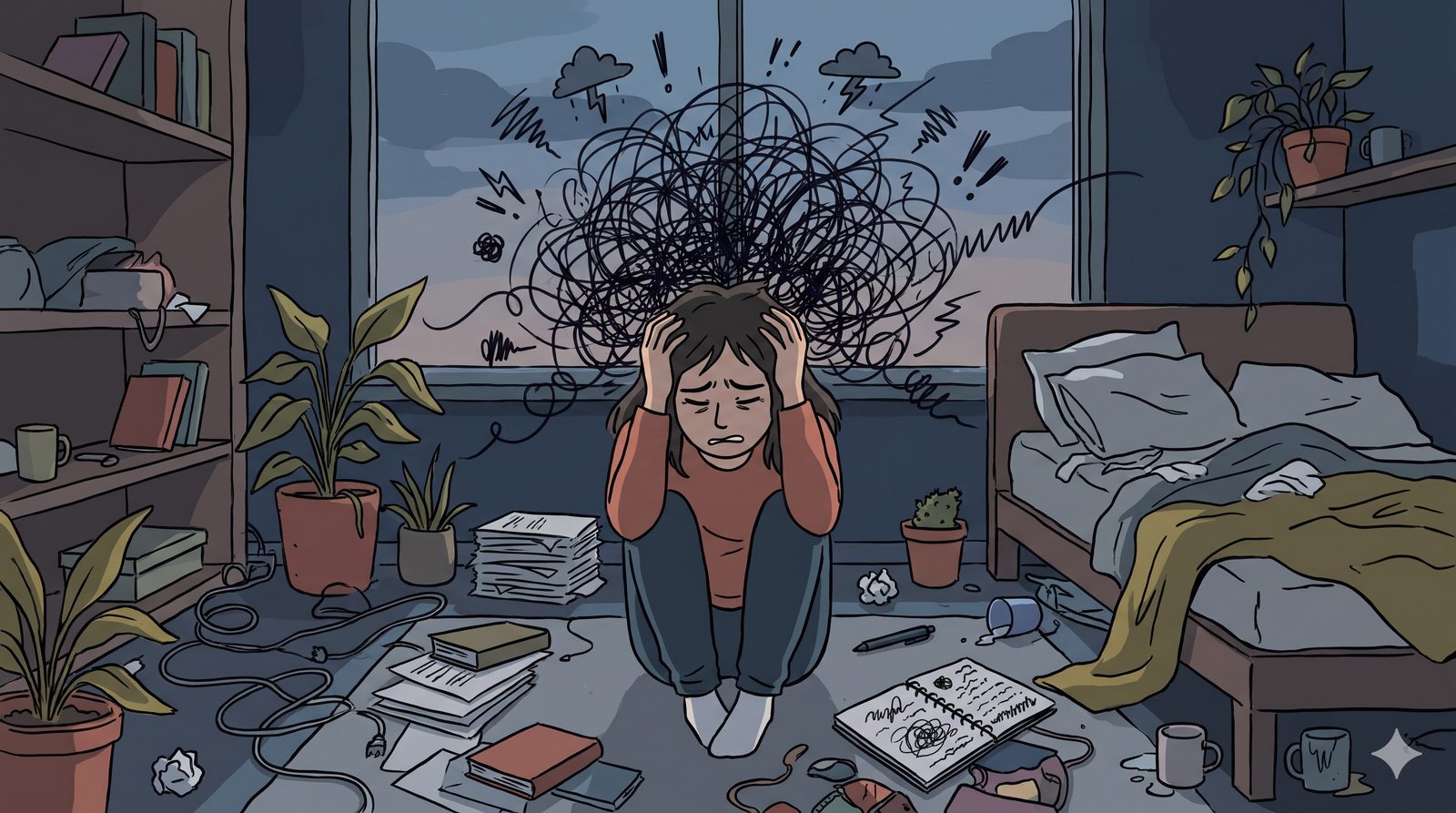
You are lying in bed completely tired from a long day and suddenly your brain decides it is the perfect time to review every conversation you had since breakfast. You find yourself staring at the ceiling while your mind loops around a single email you sent at 3 PM wondering if the tone was too harsh. This is how anxiety and overthinking usually show up. Not as a dramatic crisis, but as a low-level mental noise that makes it hard to be fully present.
The quiet reasons we overthink everything
Overthinking isn't just a bad habit, it is usually our brain's misguided attempt to protect us. When we feel uncertain about the future our mind tries to solve problems that haven't even happened yet. You might catch yourself planning out a conversation with your boss a dozen times in your head just in case they ask a specific question. We overthink because we crave control in a world that is inherently unpredictable. It often feels like if we just think about a situation long enough and from every possible angle we can somehow prevent anything from going wrong.
What anxiety and overthinking actually look like
It doesn't always look like a dramatic panic attack. Sometimes these struggles show up in the most ordinary moments. You might find yourself typing and retyping a simple text message to a friend, deleting it entirely because it doesn't sound quite right. It looks like sitting at your desk frozen because you have so many tasks to do that you don't even know where to start. It is that strange feeling of a tight chest when your phone buzzes or spending an entire dinner date half-listening because your mind is stuck on something awkward you said three years ago.
How anxiety fuels the cycle of overthinking
Anxiety is the engine and overthinking is the steering wheel stuck in a loop. When you feel anxious your nervous system goes into high alert telling you that danger is nearby. Your brain then desperately starts overthinking to find the source of that danger even if you are just sitting safely on your couch. You end up mentally exhausting yourself trying to fix a feeling. The more you overthink the more anxious you become and the more anxious you feel the harder it is to shut your mind off.
10 small ways to step out of your head
Breaking the cycle doesn't require a massive lifestyle overhaul. It is mostly about finding small ways to pause and bring yourself back to the room.
- Name what is happening. Just saying to yourself "I am overthinking right now" takes away some of its immediate power over you.
- Try the 5-4-3-2-1 method. Look around the room and name five things you can see, four you can touch, three you can hear, two you can smell, and one you can taste.
- Give your worry a time limit. Allow yourself 15 minutes to worry completely and then physically get up and change rooms to break the spell.
- Focus on your hands. Go wash the dishes or fold some laundry because doing something physical distracts the mental loop.
- Write it down to get it out. Putting thoughts on paper literally moves them out of your head so you don't have to carry them.
- Do a brain dump before bed. Keep a notepad on your nightstand to write down tomorrow's to-do list so your brain can finally clock out.
- Breathe out longer than you breathe in. This simple breathing rhythm physically forces your nervous system to calm down.
- Change your temperature. Splash cold water on your face to gently shock your system back to the present moment.
- Ask yourself if this will matter in five years. If the answer is no, try to consciously release your grip on it today.
- Move your body. Take a walk without your phone just to let the nervous energy burn off and change your scenery.
Finding quiet through mindfulness and journaling
We hear the word mindfulness everywhere these days. At its core it just means paying attention to right now without judging yourself for whatever you are feeling. When you feel your mind racing, pulling out a journal can be incredibly grounding. Seeing your anxious thoughts spilled out on a page makes them look a lot less terrifying than when they are echoing inside your head. Journaling creates a physical distance between you and your anxiety letting you breathe a little easier and process things at your own pace.
Knowing when it is time to ask for support
Sometimes the overthinking gets too loud for a journal or a walk to fix. You might realize that you are constantly exhausted and your relationships or your work are starting to feel the heavy strain of your anxiety. Reaching out for professional help is a deeply courageous step. A therapist can help you untangle those exhausting thought patterns in a safe judgment-free space. You do not have to live your life feeling constantly overwhelmed by your own mind and there is always a way forward when you decide to let someone help.