5 Daily Habits Quietly Destroying Your Motivation
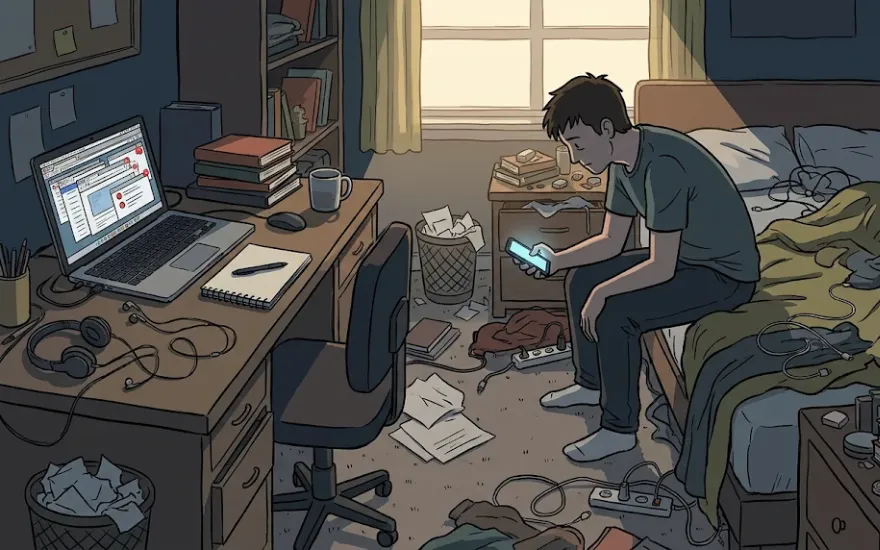
You finally have a free Saturday morning to work on that thing you actually care about. Maybe it is a personal project you have been meaning to start for months or a book sitting untouched on your nightstand. You sit down with your coffee open your laptop and suddenly feel this strange heavy resistance in your chest. Starting feels almost physically painful. Within two minutes your hand reaches for your phone without you even realizing it and an hour disappears into short videos.
We usually blame ourselves for this and assume we are just lazy or lacking discipline. The reality is that your motivation isn't broken. It is just completely overwhelmed by a handful of quiet daily habits that are constantly hijacking your brain's reward system.
How cheap dopamine kills long-term drive
Our brains are wired to chase dopamine which is the chemical that makes us feel excited and driven to take action. The problem is that modern life hands out massive hits of cheap effortless dopamine all day long. When your brain gets used to instant stimulation slow and meaningful work starts to feel unbearable by comparison.
Usually it isn't one big bad habit ruining your focus. It is five tiny everyday things we barely even notice we are doing.
- Checking your phone before your feet hit the floor. Scrolling through notifications the second you open your eyes floods your brain with high stimulation before you have even brushed your teeth making the rest of your normal morning feel painfully dull.
- Using constant background noise to survive chores. Putting on a podcast or a YouTube video just to wash three dishes or fold laundry trains your mind to panic whenever things get quiet.
- Filling every tiny gap of waiting. Pulling out your phone while waiting for the microwave to beep or standing in line for coffee teaches your brain that even ten seconds of stillness is an emergency.
- Living with twenty open tabs and constant notifications. Jumping between emails messages and work tasks every three minutes fractures your attention so badly that deep focus starts to feel impossible.
- Late-night revenge scrolling. Staying up an extra hour watching mindless clips when you are already exhausted fries your nervous system right before bed leaving you waking up mentally drained.
When you feed your mind this much high-speed entertainment all day sitting down to write a page, learn a new skill or build something real feels like trying to eat plain oatmeal right after eating a whole box of candy. Your brain isn't refusing to work because you don't care. It is just throwing a quiet tantrum because the reward isn't instant.
Why boredom is necessary for creativity
Think of your mind almost as a separate person living inside you that desperately needs a quiet room to actually think. When we fill every single waking minute with scrolling podcasts and background chatter we completely drown out that internal conversation.
There forms a massive gap between the conscious part of you that wants to build a meaningful life and the creative part of your mind that needs space to breathe. Real ideas rarely show up when you are staring at a screen. They show up in the shower on a quiet walk or while you are staring out the window doing absolutely nothing.
Boredom is actually the doorway to motivation. When you stop feeding your brain endless entertainment it eventually gets restless enough to start looking for its own projects again. That uncomfortable itch you feel when you put your phone down isn't a sign that you need to pick it back up. It is just your mind finally clearing the fog so it can start talking to you again.
Simple ways to lower your daily stimulation
Doing a dopamine reset doesn'